

Industrial Property Valuation: How Cap Rates Change the Numbers
If you’ve ever had one valuer tell you a warehouse is worth $14 million, then heard someone else put it at $16 million, you’re probably wondering who’s right. Often the answer comes down to one number that rarely gets explained properly: the capitalisation rate, or cap rate.
Industrial property is where cap rates matter most. Leased warehouses and logistics facilities are part of a broader mix of commercial property assets, but their rental income often plays a particularly important role in valuation, so even a small change in the cap rate can move the value by a lot. This guide covers what a cap rate is, why it carries so much weight in an industrial property valuation, what pushes it up or down in NSW, and what to ask when you’re reading a valuation report.
Summary
A cap rate is the yield a buyer expects from a property, calculated as net income divided by value. In an industrial property valuation, the valuer applies a cap rate to the property’s net income to reach a value, so a half-point change in the rate can shift the result by close to 10 per cent. The rate reflects how risky the income looks: lease length, tenant strength, location, building quality and who pays the outgoings all feed into it. Valuers don’t pick the rate out of the air. They work it out from recent sales of comparable properties and adjust for the differences. If you own, buy, lend against or hold industrial property in an SMSF, the useful thing to understand is the inputs behind the rate, not just the final figure.
How Industrial Property Valuation Uses Capitalisation Rates
What a cap rate actually is
A cap rate is the annual return a buyer would expect from a property based on the income it produces, before financing costs. Investors use it to compare properties and judge whether a price is fair for the income on offer.
A lower cap rate means the buyer is paying more for each dollar of income, usually because they see that income as safer or likely to grow. A higher cap rate means they’re paying less per dollar, which usually reflects more risk. It’s the buyer’s view of risk, expressed as a percentage.
The basic formula, with an example
The formula is simple:
Value = Net operating income ÷ Cap rate
Net operating income (NOI) is the income left after the expenses the owner carries. In a typical NSW industrial property leased on a net basis, the tenant pays most outgoings, such as council rates, insurance and building maintenance, so NOI sits close to the rent. Valuers also adjust for vacancy allowances, rent-free periods and any capital works the building will need soon.
Here’s a hypothetical example (the figures are illustrative, not from a real property). Say a warehouse in Western Sydney produces net income of $800,000 a year. At a 5.0 per cent cap rate, that’s a value of roughly $16 million. Nudge the rate to 5.5 per cent and the value falls to about $14.5 million. Drop it to 4.5 per cent and it rises to around $17.8 million. A half-point movement in the rate moves the value by well over $1 million, even though the building, the tenant and the income haven’t changed at all.
Why Cap Rates Move Values So Much
Cap rate and value move in opposite directions, and the effect is stronger at lower rates. Because the rate sits in the bottom of the formula, a small change in it has a big effect on the answer. That’s why two competent valuers can land a few million dollars apart on the same building if they’ve settled on slightly different rates.
Why the rate can shift even when the building doesn’t
Cap rates respond to the wider market. When borrowing costs rise, buyers often ask for higher returns, which pushes cap rates up. When lenders are keen and there’s strong demand from logistics operators, rates can compress. Cap rates don’t move in lockstep with interest rates, but they’re rarely unaffected by them. This is one reason a valuation done a year ago may not reflect today’s market without some adjustment.
What Pushes an Industrial Cap Rate Up or Down
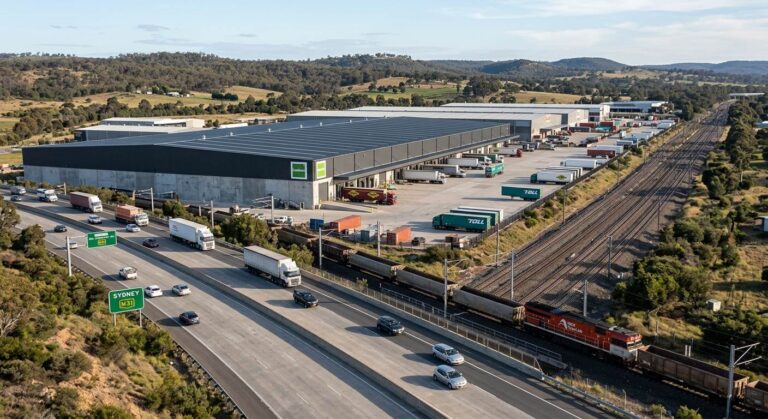
Two industrial buildings with identical floor areas can sit at quite different cap rates, partly because their road access and transport links make them more or less attractive to logistics tenants. These are the main factors valuers weigh up.
Lease length and tenant strength
A long lease to a strong tenant, such as a national logistics operator or a government agency, gives the income a lot of certainty, and that usually means a lower cap rate. A short remaining lease, a single small tenant with unclear finances or a tenant that’s likely to leave all push the rate higher. Valuers look closely at the weighted average lease expiry (WALE), which measures how long the existing leases have left to run, weighted by income.
Location and access
Proximity to the motorway network, ports and freight links matters. Industrial land near Port Botany, the M7 and M12 corridors, and the growing Western Sydney Airport area generally attracts tighter yields than more remote locations. Regional NSW can offer higher yields, but the buyer pool is usually smaller, so a sale can take longer and the evidence base is thinner.
Building specification
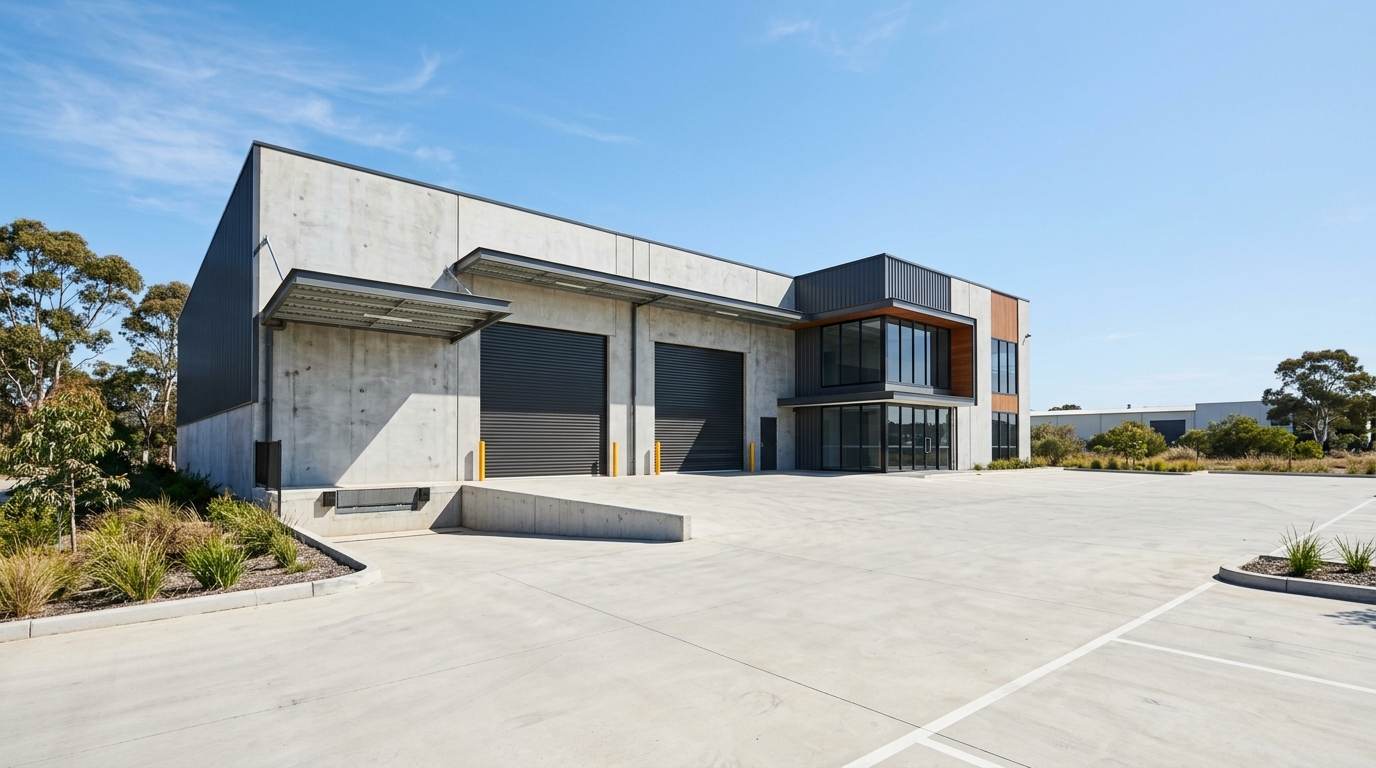
Clear internal height, truck access and hardstand area, power supply, the size of any office component and the building’s age all count. A modern facility suited to current logistics needs tends to attract a lower cap rate than an older building that needs work to lease well. Sustainability features are increasingly part of that conversation too.
Lease structure and rent reviews
Net leases, where the tenant pays outgoings, usually sit at a different yield to gross leases, where the landlord picks up those costs. Rent review mechanisms also matter. Fixed percentage increases, CPI-linked reviews and market reviews each carry different risk, and incentives such as rent-free periods can make the headline rent look stronger than the actual income the owner receives.
Where Valuers Get the Cap Rate From
A cap rate isn’t a number a valuer chooses because it feels right. It should be backed by evidence.
Comparable sales
Valuers look at recent sales of similar industrial properties and analyse the transaction yields alongside lease terms and market-rent assumptions. Then they adjust for differences in location, lease term, tenant, building quality and the date of sale. A sale from two years ago may need adjusting for market movement before it tells you much about today.
Checking the evidence
Good valuers also cross-check against market commentary, agent feedback, lender and investor surveys and their own recent experience. Be wary of any cap rate that comes without a clear reason behind it. If you’re reading a report and can’t see which sales or market evidence the rate is based on, it’s fair to ask.
Common Misconceptions
“A low cap rate always means a good property”
A low cap rate usually means a high price for the income, and it can mean lower returns for the buyer. It might reflect a secure, well-located asset, but it can also mean the buyer has paid a premium. What matters is whether the rate fits the risk.
“The cap rate is the same as the investor’s total return”
It isn’t. The cap rate only captures the income yield at a point in time. It doesn’t account for capital growth, financing costs, tax, rent increases or the cost of future vacancies. Two investors buying at the same cap rate can end up with very different outcomes.
“One sale sets the cap rate”
A single sale is one data point. A reliable valuation looks at several comparable transactions and explains how they relate to the property being valued. If the report relies on one sale that doesn’t match the property closely, that’s worth querying.
When an Independent Industrial Property Valuation Is Worth Getting
An independent industrial property valuation is useful in several common situations:
- buying or selling an industrial property, where you want to know whether the price reflects the income
- refinancing, or when a lender needs a valuation to assess loan-to-value ratios
- an SMSF buying, selling or transferring an industrial property, or reporting fund assets at market value for the year
- family law, estate or partnership matters where a property needs to be valued fairly between parties
- disputes about rent, lease terms or the value of a property
If you’re unsure which type of valuation you need, it’s worth explaining the purpose at the start, because the valuer will need to know what the report is for.
Frequently Asked Questions
What is a good cap rate for an industrial property in NSW?
There isn’t one standard figure. Cap rates depend on the location, the lease length, the strength of the tenant and the quality of the building. The most reliable way to judge a rate is to compare it with recent sales of similar industrial properties in the same area.
Does a higher cap rate mean a lower valuation?
Yes, if the income stays the same. The valuation is the income divided by the cap rate, so a higher rate gives a smaller number. This is why small changes in the rate can have a large effect on value.
Can I estimate an industrial property’s value myself using a cap rate?
You can do a rough check, and it’s useful for understanding the numbers. The formula is easy, but the inputs are harder. You need reliable net income figures and a cap rate you can actually support with evidence. Treat your own estimate as a starting point, not a substitute for a formal valuation.
How is an empty industrial building valued if it has no income?
Without income, the cap rate method doesn’t work directly. Valuers typically estimate a market rent, allow for the time and cost to lease the building and then work back to a value. They may also rely on direct sales comparison, depending on the property and the purpose of the valuation.
Does an SMSF need an independent valuation for an industrial property every year?
SMSF trustees need to determine the market value of fund assets for annual reporting. Whether an independent valuation is needed each year depends on the circumstances and the trustee’s approach. It’s a good question to raise with your accountant or fund auditor before the 30 June year-end.
Conclusion
Cap rates sit at the heart of most industrial property valuations, and a small change in the rate can shift the value by a lot. The rate reflects the buyer’s view of risk, so it’s shaped by lease length, tenant strength, location, building quality and lease structure. A valuation is only as good as the evidence behind its rate, so it’s worth asking how the rate was reached and which sales support it.
If you’re buying, selling, refinancing or reporting an industrial property and want to understand the figures behind the valuation, the team at Valuers NSW can talk you through the evidence. Call +61 438 080 786 to discuss your property and the type of valuation you need.